OneState RP - Role Play Life
- 3.8
- Rating
- 10.00M
- Installs
- Free
- Price

 Analysis by App-foxy
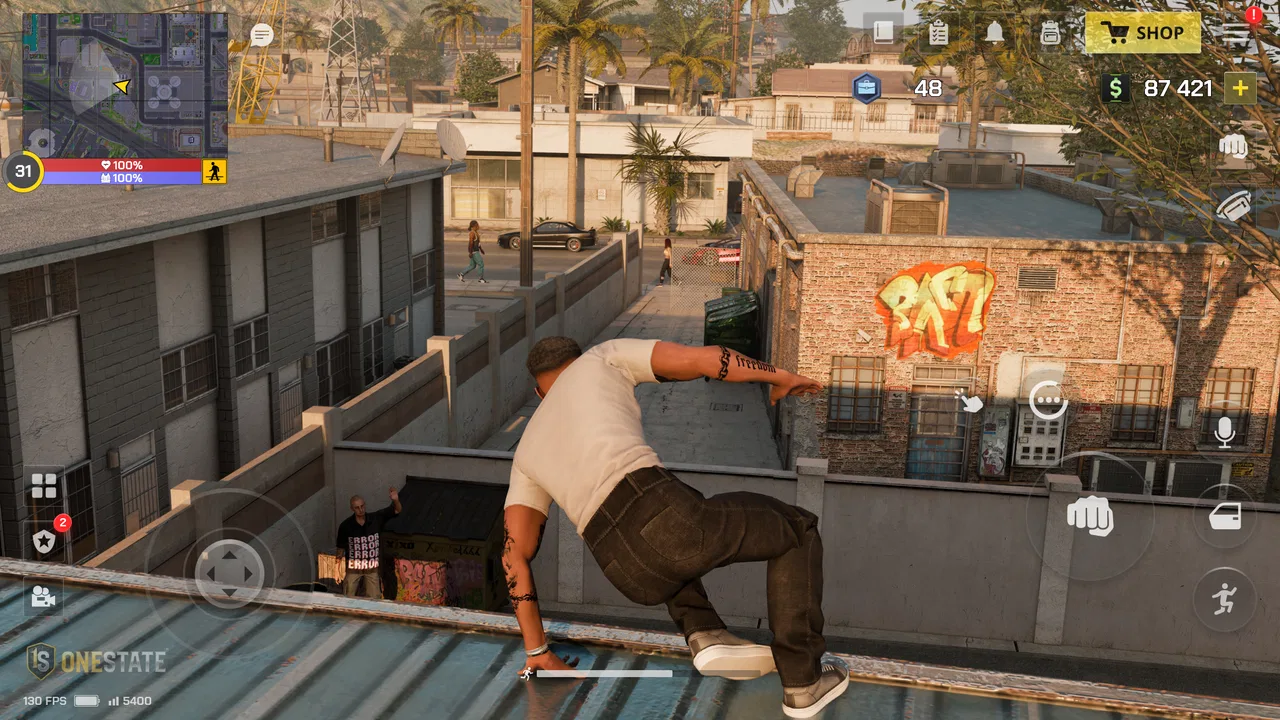
I approached OneState RP - Role Play Life expecting a straightforward city driving game, but its appeal is broader than racing from one point to another. Developed by ChillBase, this free adventure game places me in an online urban role-playing setting where cars, jobs, crime-themed activities and social interaction all compete for attention. It is aimed at players who enjoy creating their own routine rather than following a tightly scripted campaign.
The first thing to understand is that this is not best treated as a quick arcade racer. I get more from it when I decide what kind of character I want to play, choose a practical short-term goal and accept that progress comes from repeating ordinary activities as much as from dramatic moments. That makes it more relaxed than a traditional mission-based adventure, but also less immediately satisfying if I only want constant action.
It is available free of charge, carries a Teen content rating and supports devices running Android 9 or later. The current version is 0.46.2. Its scale is easy to see from its audience: the game has passed 10 million installs, with an average rating of 4.2 from roughly 89 thousand ratings. Those figures suggest a well-established player base, although they do not remove the need to decide whether its online role-playing style suits me.
You May Also Like

 Blood Strike: 2.5 Anniversary
Blood Strike’s Loadouts Turn Every Drop Into a Tactical Gamble
A close look at Blood Strike’s custom loadouts: how fast access to signature weapons reshapes its battle royale rhythm, rewards preparation, and narrows the gap between fights.

 Pandora - Music & Podcasts
Pandora’s Music Is Easy to Start, but Harder to Recover
Pandora’s strength is its low-effort path from a seed to a station. Its weak spot is how much confidence it asks you to place in connection, setup, and quiet recovery.

 8 Ball Pool
 Is Built on Rivalries, Rematches, and Routine
A close look at the rivalries, rematches, shared routines, and unanswered safety questions that turn a quick pool match into a persistent mobile community.

 Samsung Music
’s Quiet Strength Is Playing What You Already Own
Its reach comes less from spectacle than from dependable access to a personal library. That simplicity is both the app’s strongest retention engine and its ceiling.

 AccuWeather: Weather Radar
AccuWeather Review: A Quick, Clear Forecast for Everyday Decisions
For everyday plans, the best forecast is the one you can understand quickly. AccuWeather makes rain timing, radar, and local conditions easy to act on, with a few trade-offs.

 Hill Climb Racing
Why Hill Climb Racing Still Turns Crashes Into One More Run
A tiny car, a bumpy hill and one more upgrade: Hill Climb Racing keeps resurfacing because its simple chaos makes every near-miss feel personal.
More From Our News Desk
View All News


How the everyday city routine works
I find that the city routine works best when I choose one purpose before setting off, rather than treating every drive as an invitation to wander. In this section, I’d focus on how small goals can make a short visit feel worthwhile and how travel can connect activities instead of becoming dead time. That approach also makes it easier to decide when a session has done enough.
Starting with a simple personal loop
My most reliable opening routine is deliberately modest. I begin by looking at what I can do immediately, choose one activity instead of trying to sample everything, and use the resulting money or progress to improve the next session. Driving around without a purpose can be enjoyable for a few minutes, but it is not an efficient way to learn the game. A small target gives every trip a reason.
That target might be getting more comfortable with the roads, practicing movement in busy areas or building a routine around the role-play activities available to my character. The important part is consistency. OneState RP feels more coherent when I treat the city as a place where I live for a while, not as a menu of disconnected attractions.
The online setting also changes how I judge success. A quiet session can still be useful if I learn a route, understand where I tend to make mistakes or become more confident around other players. In a conventional single-player adventure, I usually expect the game to push me toward the next objective. Here, I have to create some of that structure myself.
Driving is more than a way to move
Cars are central to the experience, but I would not describe the driving as a pure racing substitute. I use vehicles to connect different parts of my routine, and the journey itself can become part of the role-play. When I rush every trip, I miss the social and exploratory side of the city. When I drive with a clear destination, I notice that the game works better as a life simulator than as a collection of races.
Players coming from dedicated racing games should adjust their expectations. Those games usually offer clearer competition, more precise track design and a stronger focus on lap performance. OneState RP gives me a wider context, where the car is tied to a character and a city routine. That broader scope is its strength, but it also means the driving may feel less focused for someone who wants technical racing first.
A realistic short-session example
If I have only a brief evening break, I do not try to rebuild my entire character. I start with a familiar activity, travel using a route I already understand and avoid spending the session chasing every distraction. If another player interaction or unexpected situation appears, I can respond without losing the original plan. This makes the game easier to enjoy in small sessions than it might seem at first.
For a longer session, I can connect several steps: earn or complete something useful, use the city to reach another activity, then spend time exploring the social side. The difference is not a special shortcut; it is the habit of grouping actions so that travel, practice and progression support each other instead of competing for attention.
Who will feel at home here?
I think the best audience is someone who likes open-ended online role-play, urban exploration and the feeling of building a personal routine. It is especially suitable for players who enjoy deciding whether today is about driving, social encounters, money-making activities or simply learning the city. The game gives those choices more importance than a linear adventure would.
I would be more cautious recommending it to someone who dislikes online unpredictability, wants a tightly written story or expects every minute to produce a clear reward. It is also not my first choice for a player seeking a dedicated competitive racer. The broad role-playing structure asks for patience, and some sessions feel more productive than exciting.
Settings, habits and the limits of faster play
I’d use this section to look at how a consistent control setup and a repeatable plan can make longer sessions feel less tiring, without pretending they remove the game’s online unpredictability. The useful distinction is between making play more comfortable and trying to rush through it: the first can help, while the second may work against the role-play pace that gives the city its character.
Settings worth checking before settling in
I recommend taking a moment to review the available control and display options before judging the driving. A setting that feels acceptable in a short test can become tiring after a longer city session. I pay attention to steering response, camera preference and any visual choices that make it easier to see traffic or nearby activity. The best arrangement is personal, but the principle is universal: remove friction before trying to improve performance.
I also consider how much visual detail my phone can handle comfortably. A busy online city can make clarity more important than maximum appearance. If the game feels crowded or difficult to read, I would rather prioritize a stable, understandable view than insist on the most demanding presentation. This is a practical adjustment, not a promise that every device will behave identically.
Controls deserve special attention because role-play and driving place different demands on the interface. I want movement to feel predictable when I am traveling, while still being able to react when the city becomes social or chaotic. If I keep changing settings during every session, I never build muscle memory. I prefer testing one arrangement for a while, then changing only the part that causes a specific problem.
Use repeatable habits instead of chasing every opportunity
Experienced play in this game is less about a secret trick and more about reducing wasted decisions. I keep a simple mental order: decide the immediate purpose, choose the most suitable activity, travel with intention and review the result before starting something else. That pattern prevents the common mistake of spending more time deciding what to do than actually doing it.
Another useful habit is separating learning sessions from progression sessions. When I am learning a route or testing controls, I do not judge the session by how much money or progress I make. When I am trying to advance, I use familiar actions and avoid unnecessary experiments. Mixing both goals can make a normal mistake feel more frustrating than it really is.
I also avoid treating every vehicle or activity as equally important at the same time. Concentrating on one practical goal helps me understand whether it genuinely improves my experience. This is particularly helpful in a free game with optional purchases, because it gives me a chance to decide what I actually value before spending anything.
Where the online design creates friction
The same freedom that makes OneState RP interesting can make it uneven. Other players can add energy and surprise, but they can also interrupt a carefully planned routine. I have to accept that not every session will unfold neatly. If I need complete control over pacing, a conventional offline adventure is likely to feel more comfortable.
The game can also feel demanding for players who expect immediate clarity. A city role-playing environment contains several possible directions, and the freedom to choose is not always the same as strong guidance. I find it easier once I set my own short objectives, but someone who wants a clearly marked sequence may spend too much time searching for purpose.
There is another trade-off in the social atmosphere. Interaction can make ordinary travel memorable, yet it can also make the experience less predictable than a solo game. I recommend approaching the online world with flexible expectations rather than assuming every encounter will support my plan.
Understanding the free-to-play boundary
The game is free to download and play, but it includes optional in-app purchases ranging from $0.49 to $125.99 per item. That wide range is worth keeping in mind before I begin. I prefer to play long enough to understand the normal progression loop, then decide whether a purchase solves a genuine inconvenience or merely encourages an impulse.
My practical advice is to set a spending limit before browsing purchase options. In a role-playing game, it is easy to confuse wanting a faster result with needing one. If I am enjoying the routine, free access is enough to evaluate the core experience. If I am already frustrated, spending money will not necessarily fix the underlying issue of unsuitable pacing or controls.
This is also where the game differs from a traditional premium adventure. A premium title usually asks for one clear purchase and then keeps the progression structure separate from a shop. OneState RP is easier to try because there is no upfront price, but I need more discipline around optional spending. That trade-off will matter more to some players than the driving or social features themselves.
What faster patterns can and cannot do
There are sensible ways to become more efficient, but I would not expect a shortcut to remove the need for repetition. The strongest pattern I found is to reuse routes and activities that I already understand, rather than constantly switching because something new appears. Familiarity reduces mistakes, improves planning and lets me spend more attention on the role-play itself.
I also group travel with purpose. If I know I need to reach a particular part of the city, I try to make the trip serve my current objective instead of wandering first and deciding later. This sounds simple, yet it changes the feel of a session because the city becomes a connected workspace rather than empty distance between menus.
What these habits cannot do is turn the game into a pure action title. They make the experience smoother, not faster in every possible sense. Players who want constant rewards may still find the life-simulation rhythm slow. That is a design difference, not a problem that settings alone can solve.
Advanced limits to keep in mind
The most important limit is that personal organization cannot control the entire online environment. Other players, changing circumstances and the open-ended structure all introduce variables. I can prepare a route and a goal, but I cannot guarantee that the city will behave like a private test track. That uncertainty is part of the appeal and part of the cost.
Device performance is another practical boundary. The minimum operating-system requirement is Android 9, but meeting that requirement does not automatically mean every phone will offer the same comfort. I would leave storage and battery headroom for an online city game, close unnecessary background tasks and judge the experience after a sustained session rather than a quick launch.
The Teen rating is also relevant to expectations. This is not a child-focused driving toy; its role-playing world includes themes that make it better suited to older players and families who are comfortable with that rating. Anyone choosing it for a younger player should consider the content context and the online nature of the experience before installing.
My verdict after settling into the routine
OneState RP - Role Play Life works best when I stop asking it to behave like a standard racing game. Its real appeal is the combination of city movement, car culture, adventure and online role-play, with enough freedom for me to decide what kind of session I want. ChillBase has built something that rewards repeatable habits more than frantic button pressing.
I would recommend it to a friend who enjoys open-ended games and does not need a constant stream of scripted objectives. The free entry point makes it easy to test, while the large existing audience indicates that the concept has found plenty of players. I would begin slowly, tune the controls, choose one routine and postpone purchases until I know what I actually want from the game.
I would skip it in favor of a dedicated racer if precise competition is my priority, or choose a story-driven adventure if I want a controlled narrative with dependable pacing. For everyone else, the deciding question is simple: do I enjoy making my own plans in a shared city? If the answer is yes, the best way to approach OneState RP is as a flexible daily routine, not a race to unlock everything.
After that adjustment, the game becomes much easier to appreciate. I can use short sessions for practice, longer sessions for social play and familiar routes for steady progress. It still has the friction of an online free-to-play experience, but its strengths are specific and worthwhile: a car-centered urban setting, room for personal role-play and a structure that lets my habits shape the experience.
FAQs for OneState RP - Role Play Life
01What is OneState RP - Role Play Life?
OneState RP - Role Play Life is a role-playing game designed for mobile platforms, allowing players to immerse themselves in a dynamic, open-world environment. You can create a character, interact with other players, and engage in various activities, from jobs to social interactions, all within a richly detailed virtual world.
02How do I start playing OneState RP?
To begin playing OneState RP, simply download the app from your respective app store. Once installed, you’ll need to create an account and customize your character. The game offers tutorials and guides to help you understand the controls and mechanics, ensuring you’re ready to explore the world freely.
03What are the main features of OneState RP?
OneState RP offers a variety of features, including character customization, a vast open world to explore, multiple careers and missions, and social interactions with other players. The game also includes a robust economy system, allowing players to earn and spend in-game currency on items, properties, and upgrades.
04Is OneState RP free to play?
Yes, OneState RP is free to download and play. However, like many mobile games, it offers in-app purchases for various items and enhancements. While these purchases can enhance the gameplay experience, they are not necessary to enjoy the game fully, allowing players to progress at their own pace.
05What are the system requirements for OneState RP?
OneState RP requires an Android or iOS device with a stable internet connection. The game is optimized for newer models, so ensure your device meets the minimum OS requirements: Android 5.0 or iOS 11.0 and above. Adequate storage space is also needed to accommodate updates and expansions.
Pros
- Immersive role-playing experience.
- Diverse character customization options.
- Active and engaging community.
- Frequent updates with new features.
- Realistic graphics and environments.
Cons
- Occasional server lag issues.
- Steep learning curve for newcomers.
- In-app purchases can be pricey.
- Limited offline gameplay options.
- Some features require high-end devices.

OneState RP - Role Play Life
Gallery